
Developmental Disabilities & the Most Common Mental Health Conditions
Think for a moment about a person in crisis. Maybe it's a young single mother, let's call her Maria, who just lost her job due to mental health challenges. The job loss is just the tip of the iceberg; it triggers a cascade of interconnected problems. She starts falling behind on rent, her anxiety escalates, and she struggles to provide nutritious meals for her children. Or, imagine Peter. He has Down Syndrome and has been living with aging parents who can't care for him any longer. He needs consistent care, and his parents don't know where to start.
In a traditional social services system, Maria and Peter might be directed to three separate agencies: one for housing assistance, another for mental health or disability support, and a third for other resources such as food stamps or community integration and support. Each organization treats a single, isolated problem, but no one addresses the interconnected web of their lives.
This fragmented, symptom-focused approach is a relic of the past. The future of social service is not about treating isolated issues but about adopting an integrated, holistic care model that addresses the whole person within their unique environment. This shift moves us from a reactive system to a proactive, compassionate, and far more effective one. Below, we'll explore the three fundamental pillars that form the foundation of this new paradigm: understanding the Social Determinants of Health (SDOH), embracing Trauma-Informed Care, and fostering Interdisciplinary Collaboration. By the end, you will clearly understand what it means to lead with a truly holistic vision.
Pillar 1: Understanding the Social Determinants of Health (SDOH)
To truly help someone, we must first understand the complete picture of their life. The immediate crisis is often just a symptom of deeper, underlying issues. This is the core concept behind the Social Determinants of Health. If we were to use the analogy of an iceberg, the presenting problem—homelessness, substance use, or chronic illness—is the visible tip. The much larger, submerged part of the iceberg represents the SDOH: the non-medical factors like a person's neighborhood, their level of education, their economic stability, and the social support they have. These factors are not just background details but the primary drivers of well-being and life outcomes.
Research from organizations like the World Health Organization estimates that clinical care accounts for only 10-20% of a person's health and well-being. Their environment and social circumstances influence the remaining 80-90%. This startling statistic underscores a critical truth: we can't effectively treat a person's anxiety without addressing their housing instability, or help them find a job without considering the food insecurity they face.
So, how does an integrated social services model address these factors? It starts by recognizing them as central to the care plan. Instead of just helping with a single application for food stamps, a holistic agency would also ask: "What's preventing you from getting enough healthy food? Is it transportation? Is it a lack of a stable kitchen? Is it a lack of funds due to job loss?"
Key factors of SDOH that demand an integrated response include:
Housing Stability: A safe, consistent home is a non-negotiable foundation. Without it, it's nearly impossible for an individual to maintain employment, manage a chronic health condition, or succeed in the community.
Food Security: The link between consistent, nutritious food and physical and mental health is undeniable. Malnutrition can exacerbate mental health issues and lead to a host of chronic diseases, creating a vicious cycle.
Educational Attainment: Lack of education often leads to low-wage jobs, perpetuating a cycle of poverty and limited access to critical resources and opportunities.
The first step for organizations on the journey to a more integrated social service model is to shift your perspective. Ask deeper questions, look for connections between seemingly disparate problems, and acknowledge the powerful influence of a client's environment.
Pillar 2: The Foundational Principle of Trauma-Informed Care
Once we understand the influence of a person's environment, we must also understand their history. Many individuals seeking social services have experienced some form of trauma. This is why trauma-informed care is not just an add-on; it's a foundational principle that must be woven into the fabric of an entire organization. It's a lens through which every interaction, policy, and practice is viewed.
A trauma-informed approach starts by moving away from the question, "What’s wrong with you?" and asking instead, "What happened to you?" This simple shift reframes the conversation from one of judgment to one of compassion and understanding. A trauma-informed organization operates on four core principles, often called the "4 Rs":
- Realizing the widespread impact of trauma.
- Recognizing the signs and symptoms of trauma in clients, families, and staff.
- Responding by integrating knowledge about trauma into every aspect of operations.
- Resisting re-traumatization by avoiding practices that might unintentionally cause harm.
Think about a traditional intake process. A client is handed a rigid form with dozens of questions that can feel intrusive and unempathetic. This could be re-traumatizing for someone who has experienced abuse or feels a loss of control. In contrast, a trauma-informed approach would involve a flexible, client-led discussion, allowing the person to share their story at their own pace, in a safe, judgment-free space. This approach builds trust, promotes empowerment, and increases clients' likelihood of engaging with and benefiting from services.
To implement trauma-informed care, an organization must invest in comprehensive staff training, ensuring every team member understands the effects of trauma on a person's brain, behavior, and relationships. It also means creating physically and emotionally safe environments and, most importantly, giving clients a voice and choice in their care plan.
Pillar 3: Interdisciplinary Collaboration for a Complete Support System
In the past, social service organizations often operated in silos. Each agency focused on its specific mission—one for housing, another for mental health, a third for job training—with little to no communication between them. This fragmented approach is not only inefficient; it can be exhausting and frustrating for the people who need help the most. The burden falls on the individual to navigate a maze of appointments, paperwork, and different case managers.
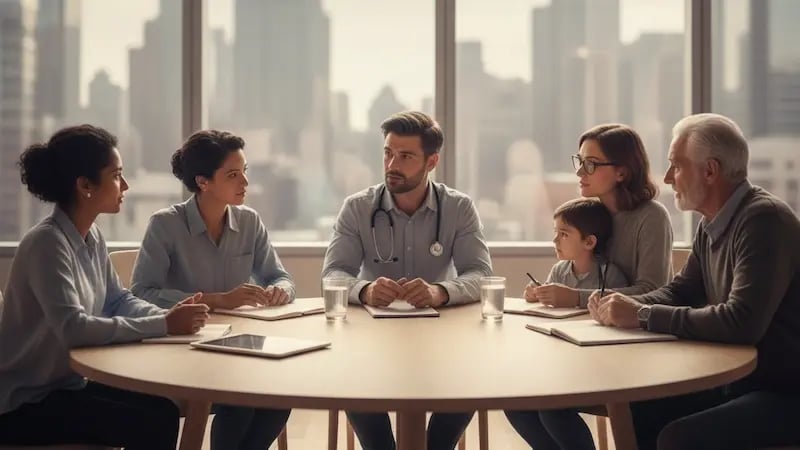
The future of social service demands a different model: one of seamless interdisciplinary collaboration. This is about creating a "care team" that extends beyond a single agency to include healthcare providers, educators, and other community partners. This support network ensures that every aspect of a client's life is addressed in a coordinated and holistic manner.
Consider the following examples of what this collaboration looks like in practice:
Healthcare Providers: A social worker can work directly with a nurse or doctor to ensure that a client with a chronic illness also receives integrated mental health support, as the two are often deeply intertwined.
Educators and Community Organizations: A counselor, social worker, and parents can collaborate on a single plan to support an individual struggling to cope, recognizing that the root cause may be a difficult home environment or unaddressed trauma.
Imagine Maria from the beginning of this article. Through an integrated social service model, her care team might include a social worker to help with housing, a therapist to address her anxiety, a food security specialist to help her family get nutritious meals, and an employment specialist to help her find a new job.
For Peter, something similar involves finding him community housing, developing skills, and integrating into his community. These professionals would communicate and coordinate their efforts, ensuring Maria and Peter receive complete and cohesive support. This approach doesn't just treat their symptoms; it empowers them to rebuild their life.
Moving Towards a More Compassionate Future
The shift to an integrated social services model is not a temporary trend; it’s the evolution of compassionate care. By addressing the Social Determinants of Health, operating with a trauma-informed care lens, and fostering interdisciplinary collaboration, we can move from simply managing symptoms to truly transforming lives. This holistic approach creates a more effective, humane, and sustainable system for everyone involved.
This is the very vision that organizations like CRi are dedicated to. We believe that by working together and seeing the full picture, we can create a future where every person has the opportunity to thrive.