Questions to Ask When You're Choosing a Residential Care Program
The nursing profession, often stereotyped within the confines of a bustling hospital, is far more diverse and impactful than you'd think. While the image of a healthcare professional in scrubs navigating a high-stakes environment like a hero is certainly true, it only scratches the surface of nurses' vast contributions to society.
In a different, equally critical setting, another kind of hero works quietly, not against the clock of an emergency room but within the rhythms of daily life. This is the world of residential nursing, a field that moves beyond the traditional model of care to a more intimate, human-centered approach. Here, a nursing career isn't defined by dramatic rescues but by the subtle, consistent art of proactive care and deep, personal connection.
But what does a day in the life of a residential nurse truly look like? It's a rewarding journey that unfolds one personalized interaction at a time, proving that the most profound healing often happens in the most unexpected places.
The Morning Routine: More Than a To-Do List
A residential nurse's day doesn't start with a frantic rush. Instead, it begins with quiet observation and genuine connection. The early morning hours are dedicated to personalized check-ins, where a simple "Good morning, how did you sleep?" serves as the first vital sign. It's a moment to assess a person's overall well-being, both physical and emotional, before the day's activities begin.
This isn't just about completing a checklist but building trust. A residential nurse might notice a resident is a little quieter than usual or perhaps a bit more restless. These subtle shifts are often the first clues to an underlying issue, and a proactive nurse can address them before they escalate. This is the essence of skilled nursing in a residential setting—using a trained eye and empathetic heart to see what the numbers on a chart might miss.
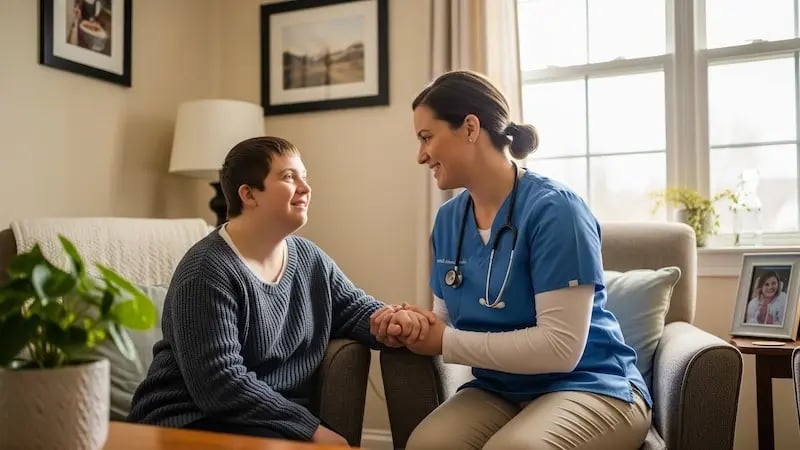
Imagine a nurse named Maria. Her morning starts by helping a young man named Alex prepare for his day. Alex, who has complex developmental disabilities, has been showing subtle signs of a chest cold. Instead of waiting for a fever to spike, Maria knows to carefully assess his breathing patterns and hydration levels, adjusting his plan to include extra fluids and rest. This simple, proactive step is what prevents a mild cold from becoming a major health concern, allowing Alex to stay comfortable and healthy at home.
The Heart of the Day: The Art of Skilled Nursing
Once the morning routine is complete, the heart of the residential nurse's day begins—and it's a masterclass in applying skilled nursing with a powerful layer of empathy.
A key part of this role is interpreting behaviors as a form of communication. For individuals who may struggle with verbal expression, a change in behavior, mood, or routine can be a loud signal that something is wrong. For example, a sudden increase in agitation could be a symptom of pain or a urinary tract infection. A residential nurse is trained to connect these dots, making a crucial diagnosis that might otherwise be missed. This is where a nurse's specialized knowledge and observational skills truly shine.
The day is filled with a variety of tasks that highlight the breadth of a residential nurse's expertise:
Managing Complex Health Conditions: From administering insulin to managing complex feeding tubes or implementing seizure protocols, the residential nurse ensures that even the most complex medical needs are met with precision and care.
Wound Care and Treatment: They provide specialized wound care and other necessary treatments in the comfort and familiarity of the patient's home.
Team Collaboration: They serve as the central point of contact for a care team, coordinating with support staff, physicians, and specialists to ensure that every aspect of an individual's health is addressed holistically.
This isn't a one-size-fits-all approach. Every action, every decision, is guided by a personalized care plan, meticulously tailored to the individual's unique needs, goals, and personality. It's a testament to how a nursing job in this field is about empowering people, not just treating illnesses.
Challenges and Rewards: The Ripple Effect
Make no mistake, this nursing career is not without its challenges. It requires immense emotional and physical resilience. Residential nurses often work independently, making quick decisions with limited immediate supervision. They carry the weight of being the primary healthcare expert in a home setting.
Yet, for every challenge, there is an immeasurable reward. The true joy of residential nursing lies in the lasting relationships forged. A residential nurse gets to witness small, everyday victories—a person learning a new skill, a moment of laughter shared with a care team, or simply the comfort of knowing someone is happy and healthy in their own home.
Think of the satisfaction of helping a person with a long-term medical issue experience a truly good day, where their health concerns fade into the background and they can simply enjoy their life. The work of a residential nurse has a ripple effect, not only on the individual but on their family and the entire community. They are the reason many individuals with developmental disabilities can thrive in a familiar environment rather than a hospital.
The Future of Care: A Vision for Residential Nursing
As our society shifts toward more person-centered, community-based healthcare models, the demand for nurse jobs in residential settings is growing exponentially. Residential nurses are not just a part of this movement; they are its driving force. They are the champions of a future where healthcare is not confined to institutions but is woven into the very fabric of our communities.
Investing in skilled and compassionate residential nursing is an investment in the dignity and quality of life of countless individuals. It's about recognizing that every person deserves to feel safe, healthy, and supported in the place they call home.
This vision is at the core of our work. At CRi, we understand that providing exceptional care goes far beyond clinical expertise. It's about creating a compassionate, supportive environment where people with developmental disabilities and behavioral health needs can flourish. Our approach is rooted in the belief that personalized, proactive, and compassionate residential nursing is the key to unlocking an individual's full potential and ensuring they can live a life of comfort, independence, and dignity.
We invite you to learn more about the profound impact of this unique field and how our team is dedicated to changing lives, one day at a time.